


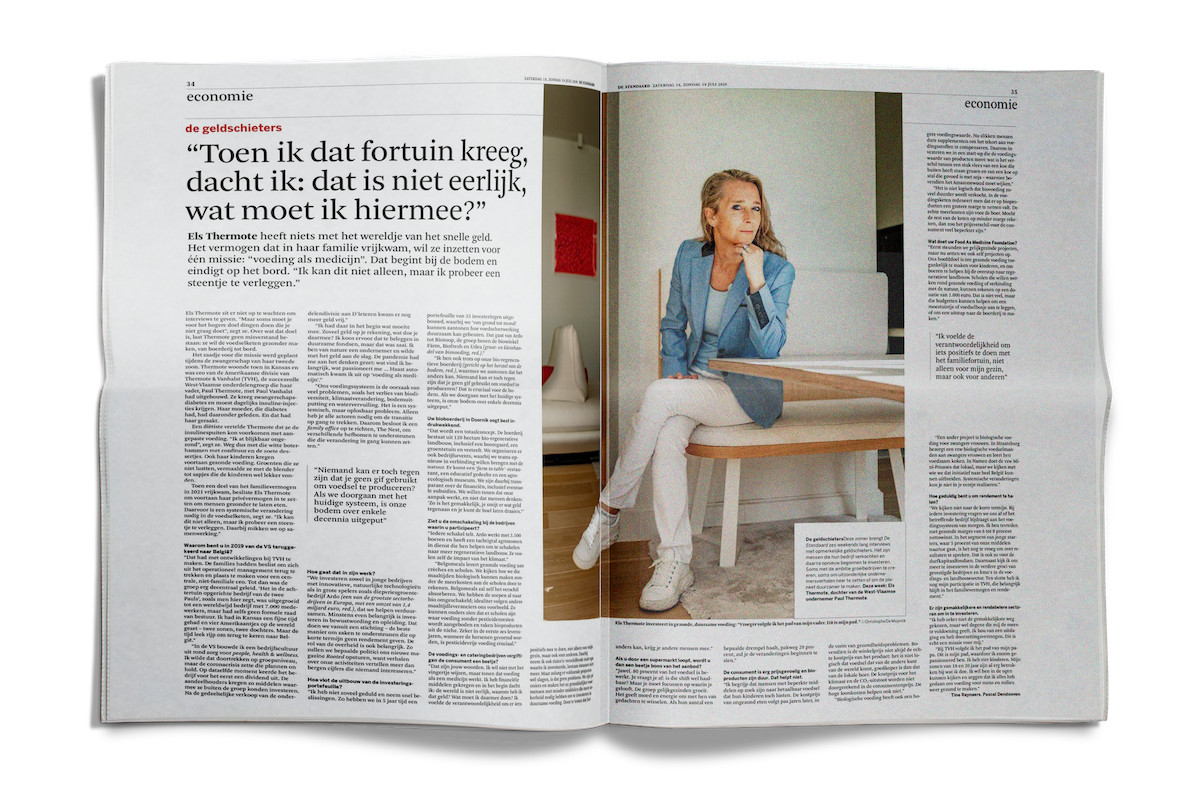
In July, De Standaard interviewed our founder Els Thermote as part of their The Lenders (De Geldschieters) series. In the interview, Els shares her sense of purpose and entrepreneurial drive that led to creating The Nest:
“Our food system is the cause of many problems, such as biodiversity loss, climate change, soil depletion, and water pollution. It is a systemic, but solvable problem. However, you need all actors to get the transition underway. That is why I decided to establish a family office, The Nest, to support various levers that can set that change in motion.”
The interview includes a compelling glimpse of the “why” behind The Nest’s systemic investment strategies, the creation of our Food as Medicine Foundation, the vision for Domaine de Graux. Thank you to De Standaard for their care in sharing Els’ story.
From The Nest
Rooted in our mission
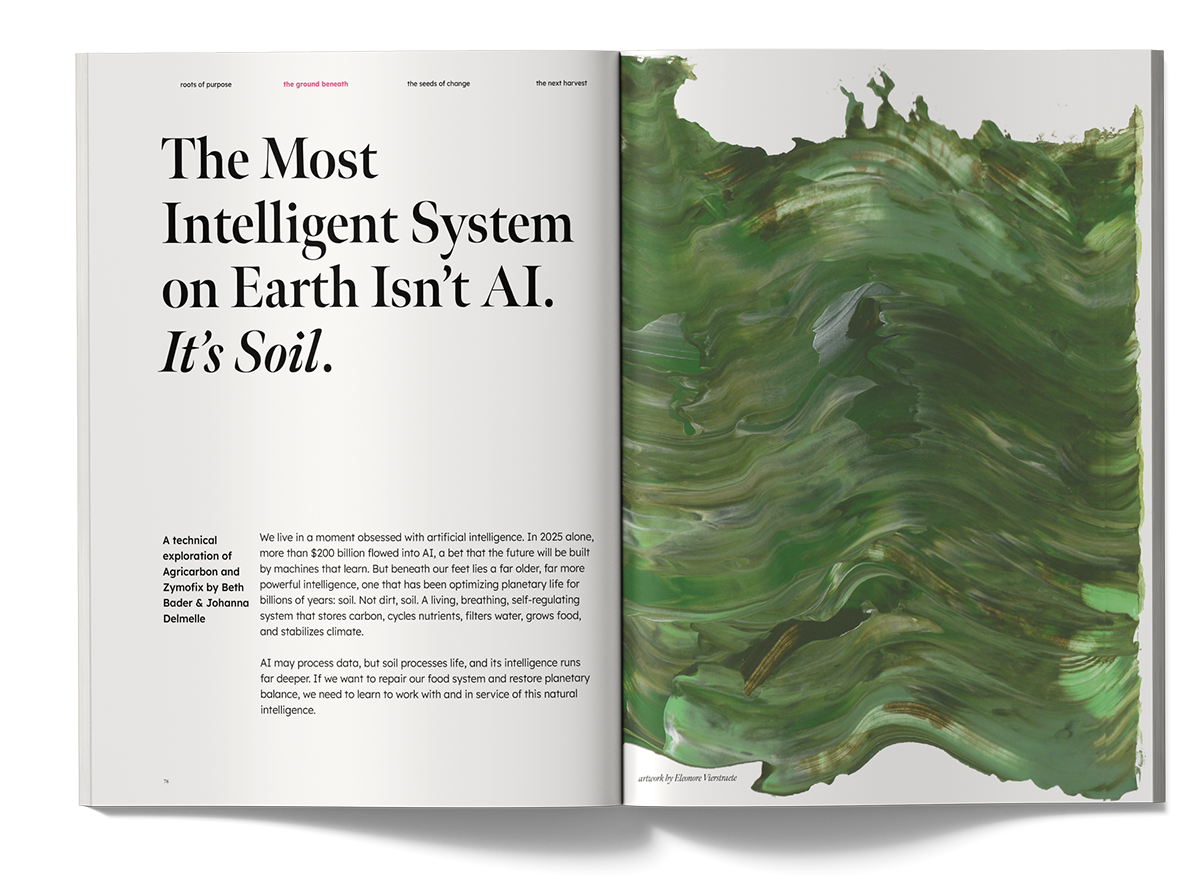
If the interview has you interested in learning more about The Nest’s mission, our impact, and our founder’s journey, you can access our magazine, Rooted. Rooted is more than an impact report, it is a magazine about the future our food system could have, and a bridge between the many stakeholders who shape it. We hope you will join us in the conversation, including the article featured this month on our LinkedIn page, “The most intelligent system on Earth isn't AI. It's soil.”
From the Farm
The headlines in Europe convey the devastation from climate-fueled heat waves. Our hearts are with those affected. We are fortunate that the farm is safe, however the high temperatures have meant adjustments to our market garden. From adding row covers and mulch, to storing precious rainwater in a drought and shifting work schedules, our team, like our soils, have stayed resilient.
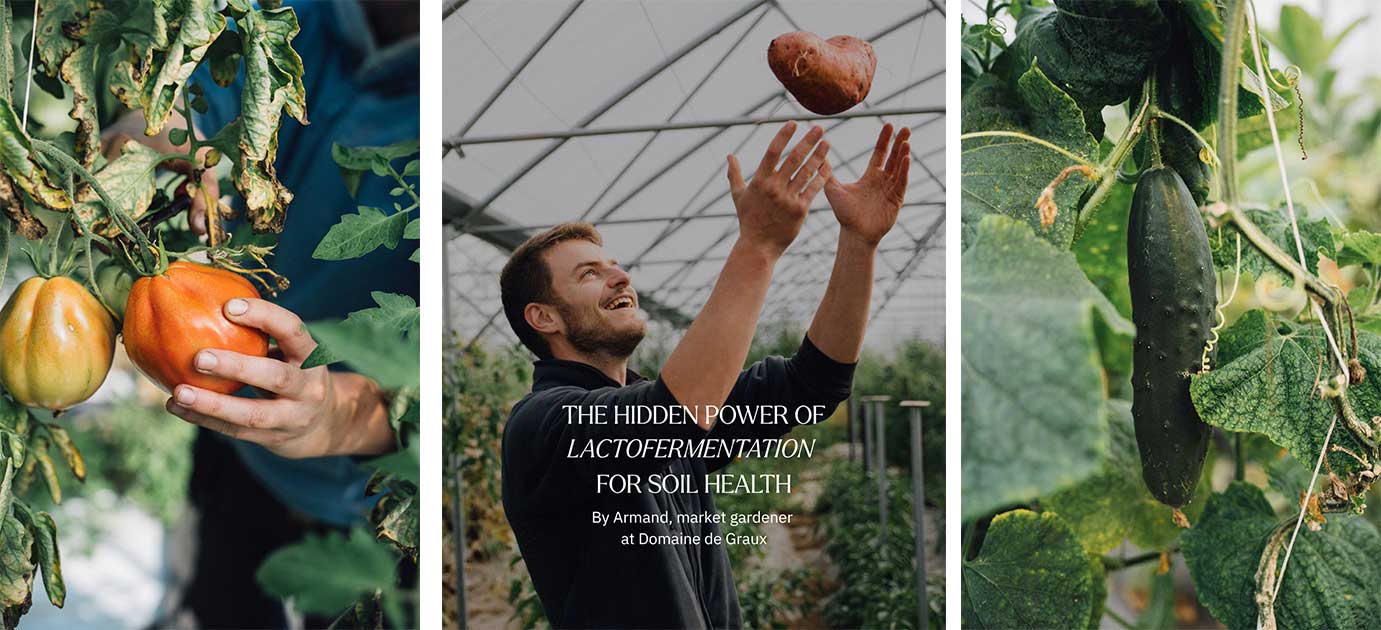
At Domaine de Graux, our team grows not only vegetables, but also their understanding of the living systems we rely on. Armand, our market gardener, shares what he has learned about applying lactofermentation for soil health
Food as Medicine Foundation
In June, we announced the selected projects from our Health, from Soil to Stomach Project Call: La Ferme d’Anjou, Plukgeluk, and Oxalis - Ecole de cuisine végétale in partnership with L'école comestible.
Farm for Good
Farm for Good, one of the projects we support ongoing, co-founded Tomorrow Food with four other Belgian farmers’ cooperatives: Reinette & Co, Biomilk.be, BelgoBio, and Coq des Prés. Collectively, their efforts unite 200 farmers with more than 13,000 hectares in transition and about 40 agri-food companies. The new alliance aims to convert 20% of Belgium’s arable agricultural acreage into organic and regenerative agriculture.
Tomorrow Food recently set up their Tomorrow Food Market at the 90th Libramont Fair, 24-27 July, featuring more than 100 products sourced from Belgian supply chains.
Seaweed Insights
In a new article, “What it Will Take to Scale Seaweed Biostimulants,” Peter Green of the Hatch Blue team highlighted the seaweed biostimulants market potential, forecast to reach USD 2.4 billion by 2030. The summary links to a full white paper and farmer brief on the topic.
Portfolio News
Edacious
Hudson Valley-based Community Food Works, a food processing and distribution non-profit, has partnered with Edacious to measure the nutritional outcome at each step of the supply chain from grain harvest to milled flour, to the loaves of bread delivered to schools. CFW aims to establish value based on nutrition per acre instead of yield.
Quick Organics
Quick Organics helped lead the development of the Common Organic System Plan or OSP, as announced by the USDA National Organic Program. The Common OSP is a significant achievement that will not only streamline and strengthen organic certification across the sector but will also improve oversight for organic integrity.
Other Portfolio Headlines
Agricarbon: Raising the Bar for Soil Carbon Measurement (ISCIA Webinar Recap).
Ardo: From insight to action: How Ardo and its farmers accelerate better agriculture (Page 19, Sustainability Report).
Atomo: Atomo develops prebiotic coffee products with 2g of added fiber per cup.
Färm: The Journey of a Vegetable from Pitchfork to Fork.
Fund News
Astanor
In July, Astanor announced backing a €5M seed round in Aardaia, along with investors Point Nine, Grey Silo Ventures, FoodLabs. The startup identifies wild plants with desirable traits and develops the varieties into new crops. Notably, Aardaia does not use genetic modification or editing. Plant breeding is guided by large genomic datasets and predictive modeling. Aardaia’s application of technology reduces the time bring a new crop to market while expanding diversity of food crops. Their first crop is a protein-rich tuber, the aardaker, that fixes its own nitrogen.
Other Fund Headlines
Greensphere: Gaia Sciences Innovation (GSI) Fund Impact Report.
Pymwymic: In conversation with Pymwymic’s new advisory committee member, Marjolein Brasz.
Synthesis Capital: Planetary Boundaries and Agriculture: Climate Change.
Impact
How do we measure the impact of system change? TransCap Initiative addresses the topic in an informative, five-part series on evolving impact management and measurement.
What We Are Reading, Watching and Listening To
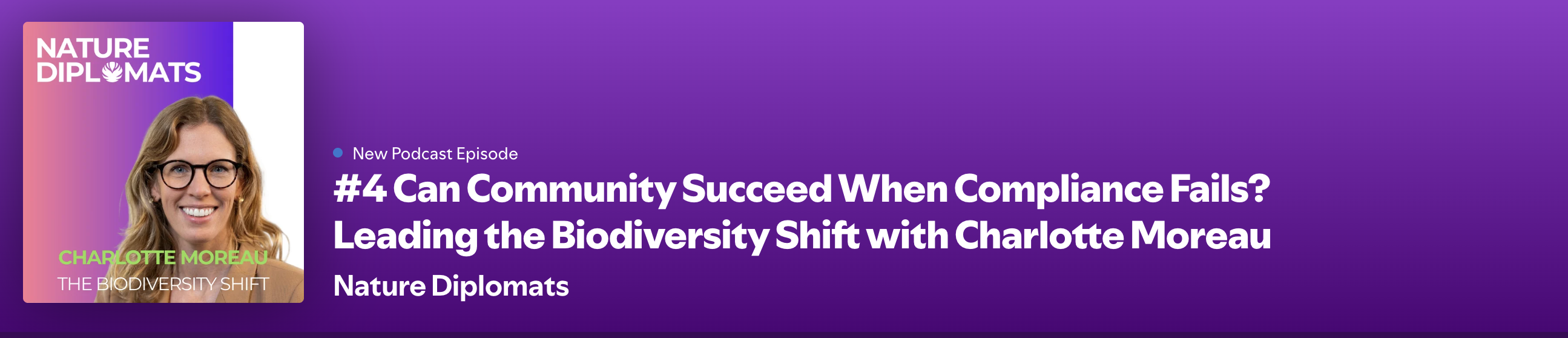
The Nature Diplomats podcast (Spotify) featured Charlotte Moreau of the Biodiversity Shift in the episode, “Can Community Succeed When Compliance Fails?” Charlotte’s story reminds us that the path to our life’s purpose often takes the scenic route. She began her career as a business engineer and cleantech trade commissioner before taking year-long bike tour from Kenya to Cape Town. Inspired by the beauty of nature around her, and the threats to its biodiversity, she changed her course. Today, she leads Biodiversity Shift, a program of Belgium’s sustainability network, The Shift.
Stories of Hope
“Stay open to learning, share your knowledge generously with others, and be a leader in your community. We must know how to grow our own food.”
Christiana Ukiomogogbe, an organic farmer from Lagos, Nigeria, started with a single acre and a goal to raise clean, safe food for her family. Today her farm is scaling production to bring organic food to local markets, and she shares seeds, surplus produce, and meat with her church’s food bank.