On valuing the ground beneath our feet, ecologically, economically, and humanly
There is a Native American proverb that says: we do not inherit the earth from our ancestors, we borrow it from our children. I have heard something close to that sentiment from nearly every farmer I have ever spoken with. They see themselves as stewards of the land, not owners of it. The soil is their legacy, their laboratory, their ledger. They don’t talk about bulk density or microbial respiration, but they know when the earth is alive. They know when it breathes.
I want to write about soil from that same place. Not as a substrate. Not as a carbon sink. Not as a variable in a yield model. I want to write about soil as an asset — ecological, economic, social and cultural — and make the case that scientists, investors, policymakers, and farmers must together reimagine what it means to value and protect her.
What makes soil an asset?
An asset is anything that holds value and generates benefits, now and in the future. Healthy soil fits that definition with room to spare.
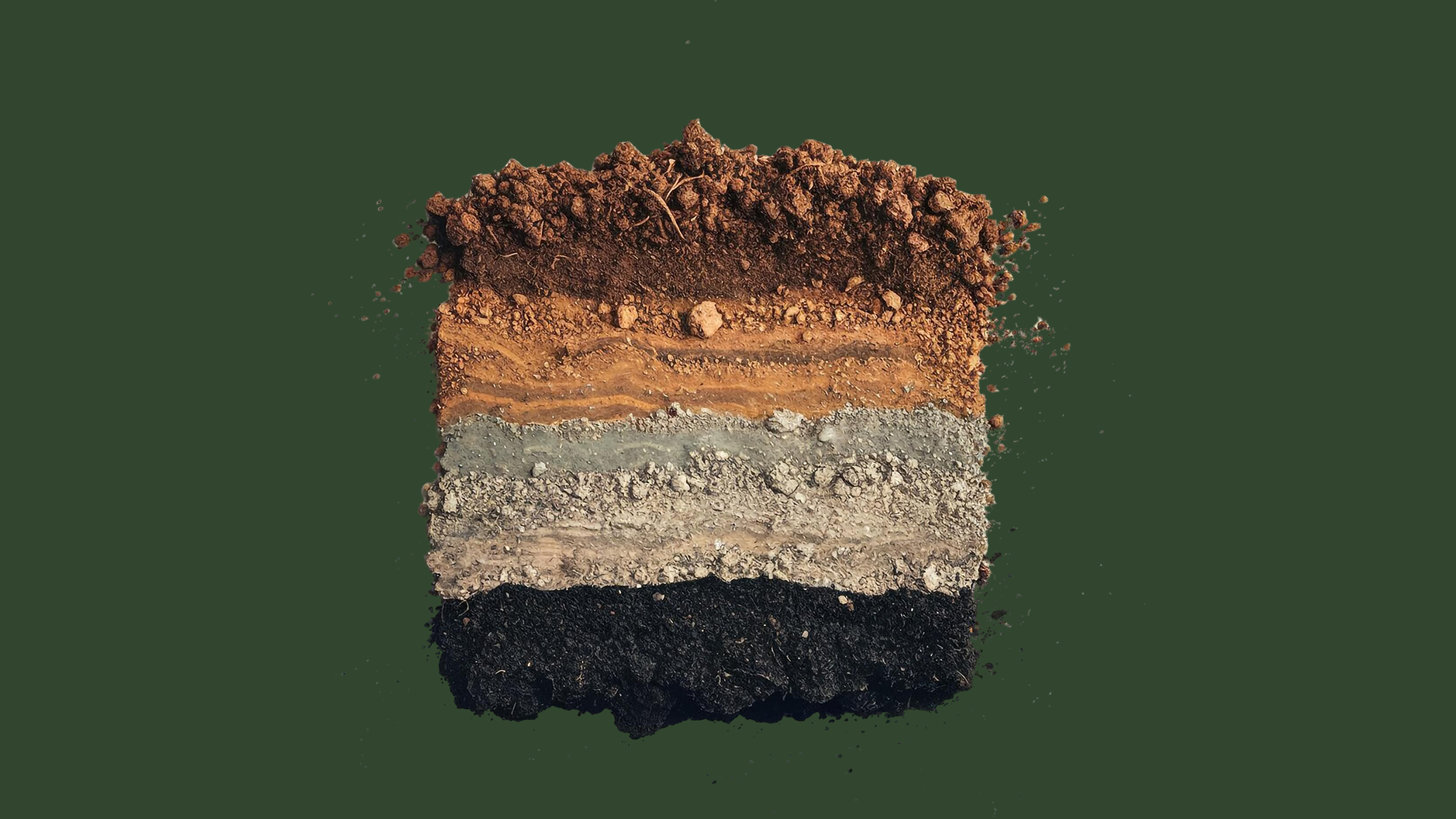
Biologically, it hosts microbial communities that rival the biodiversity of tropical rainforests. Chemically, it buffers nutrients, detoxifies pollutants, and supports complex cycling. Physically, it stores water, prevents erosion, and anchors entire ecosystems. Soil does not just hold value, soil creates it. Without soil, there are no crops, no clean water, no stable climate, no food systems. Without soil, there are no humans.
Yet despite our economies depending entirely on it, soil remains massively undervalued. In public policy, in financial markets, in research, and in our collective imagination.
Worse, we operate as though soil were replaceable. But it is not. No technology can manufacture in a laboratory what four billion years of biological co-evolution have built beneath our feet.
Soil is foundational to food systems, to water security, to biodiversity, and to climate adaptation. In short: soil is foundational to life. And we need to start treating her accordingly.
Investing in soil means investing in people
For us at The Nest, this conviction translates directly into investment practice. Investing in the regeneration of soil means, fundamentally, investing in the people who care for and steward it. It means empowering the hands that feed us, not just buying the land as a diversified investments strategy.
That means channeling capital into regenerative agriculture, agroecology, soil health outcomes, and building the science-based metrics that can link ecosystem function to financial performance. Soil health-linked financing mechanisms, agroecological transition funds, lease incentives for long-term soil care: these are not abstract instruments. They are the architecture through which capital can begin to honor what soil actually does.
But here is the order of operations that matters: policy and finance must follow function. Function must follow science. And science must follow the field.
Epistemic humility: why the field comes first
In finance, we speak of asset managers. Professionals who manage portfolios, generate returns, chase alpha. But for soil, the asset manager is the farmer. And farmers do not read soil through spreadsheets or sensor arrays. They read it with their boots.
There is rigor in scientific observation and quantitative modelling. I want to be clear about that. But there is also rigour in experience. In walking the same fields for thirty years. In noticing how cover crops change the smell, the colour, the feel of the earth underfoot. These are not soft signals. They are data of a different kind, accumulated across seasons and generations, held in bodies and memories rather than databases.
Too often, we reduce everything linked to climate and soil to a single metric: carbon. It is a useful proxy, but it is a dangerous simplification. Soil health cannot be captured in one number, and solutions built on one number will always miss something important. Sometimes catastrophically so.
Considering soil as an asset class therefore requires what philosophers call epistemic humility: the recognition that our knowledge is always partial, always situated, always incomplete. Farmers, Indigenous communities, and land stewards hold valid insights that sensors and models do not. The microscope and the spreadsheet see one truth. The farmer’s boots see another. Epistemic humility is knowing we need both, and that neither alone is sufficient.
It means accepting that just because something does not appear in a report, it doesn’t mean it isn’t real.
From science to field, and back again
Science and investment that do not listen are science and investment that will not be applied or worse, will generate the unintended consequences they were meant to prevent.
The solutions already exist. Farmers and nature have known them for ages. What we need to do is listen, and then amplify.
That means participatory research. Farmer-led trials. Flexible financing structures. Open data feedback loops. It means going into the land and looking beyond carbon. Building multi-parameter indicators that can hold the complexity of what soil actually does. A single indicator does not allow for a holistic solution.
It also means flexibility of thought. The willingness to let the field reshape the question, not just supply the answer. If we want research and finance to shape practice, they must start with the people who live the questions we are trying to answer.
If this is not the first article you have read in this magazine, you will have realised by now that we’re advocating for a systemic, long-term, sometimes intuitive approach. One that takes into account not only the objective, but the wider system within which it must operate. Because credibility does not come from peer-reviewed papers or double-digit returns. It comes from relevance.
A final note: the same logic applies everywhere
Everything said here about soil applies, with equal force, to every natural asset. Clean water, forests, biodiversity, none of these appear on balance sheets, yet losing them creates systemic risks across food production, public health, and entire supply chains.
Investing in nature recognises a simple truth: restored ecosystems generate real returns. Resilience. Productivity. Long-term stability. This is not philanthropy. It is the rigorous management of the most essential capital we have.
The question is not whether soil deserves to be treated as an asset. It is whether we are willing to manage it with the seriousness, the humility, and the care this asset demands.
This article appears in the first issue of Rooted, a magazine about rethinking the food system from the ground up. Rooted is where data meets story, where numbers make way for the people, soil, and decisions behind them. You can read the full issue here