It is Time for Honest Food Policy
Why is organic still treated as a niche today, when it should in fact be the norm? And why do consumers have no idea which pesticides were used to grow their food, even though that information is crucial for both human health and the environment? Our current food logic is upside down.
Organic farming is commonly framed as a conscious but more expensive choice, something for those who can afford it. Conventional farming, by contrast, is presented as the default, even though it relies heavily on chemical pesticides with well-documented harmful effects on biodiversity, soil quality, water systems, and human health. This situation is not neutral. It is the outcome of decades of policy focused almost exclusively on maximizing production.
In my opinion, the logic should be reversed: organic production as the norm, and food grown with pesticides clearly labelled.
Today, consumers can see exactly how much sugar, fat, or salt a product contains, yet they remain largely uninformed about the pesticides used in its production. That is hard to justify. Pesticides are not a minor detail. They affect pollinators, contaminate waterways, and accumulate in ecosystems. Yet they disappear behind the vague label of "conventional".
A simple, transparent label, comparable to nutritional information or allergen declarations, would make this visible. Not to prohibit, but to inform. Because genuine consumer choice only exists when people know what they are buying. Especially as recent research shows that combined exposure to multiple pesticides is linked to an increased risk of certain cancers, including Hodgkin lymphoma, leukemia, and prostate cancer. In France, Parkinson's disease has been officially recognized as an occupational disease among farmers.
Critics argue that such measures would make farming unaffordable or unfairly stigmatize farmers. This misses the point. The problem is not the farmer, but the system in which they operate. For years, policy has favored scale and chemical inputs, while sustainable alternatives received far less structural support. Farmers have not emerged as winners from this system, quite the opposite.
Making organic the norm would fundamentally shift the playing field. Sustainable farming becomes more affordable when it is no longer exceptional. Innovation, research, and public support follow the norm, not the margin. At the same time, the real costs of pesticide use, environmental damage, health impacts, water treatment, finally become visible where they belong: on the label and in the price.
This is not about moralizing or finger-pointing. It is about fairness. Those who use pesticides should be able to do so. But they must also be transparent about it, just as food producers must disclose additives. Transparency is not a punishment; it is a basic requirement of a credible food system.
We are facing profound challenges: climate change, biodiversity loss, and rising health concerns. Believing we can address these without rethinking the foundations of our agricultural system is naïve. Organic as the norm and pesticide labelling are not radical demands. They are logical steps towards a more sustainable and honest food future.
The question is not whether we can do this.
The question is why we still have not.
------
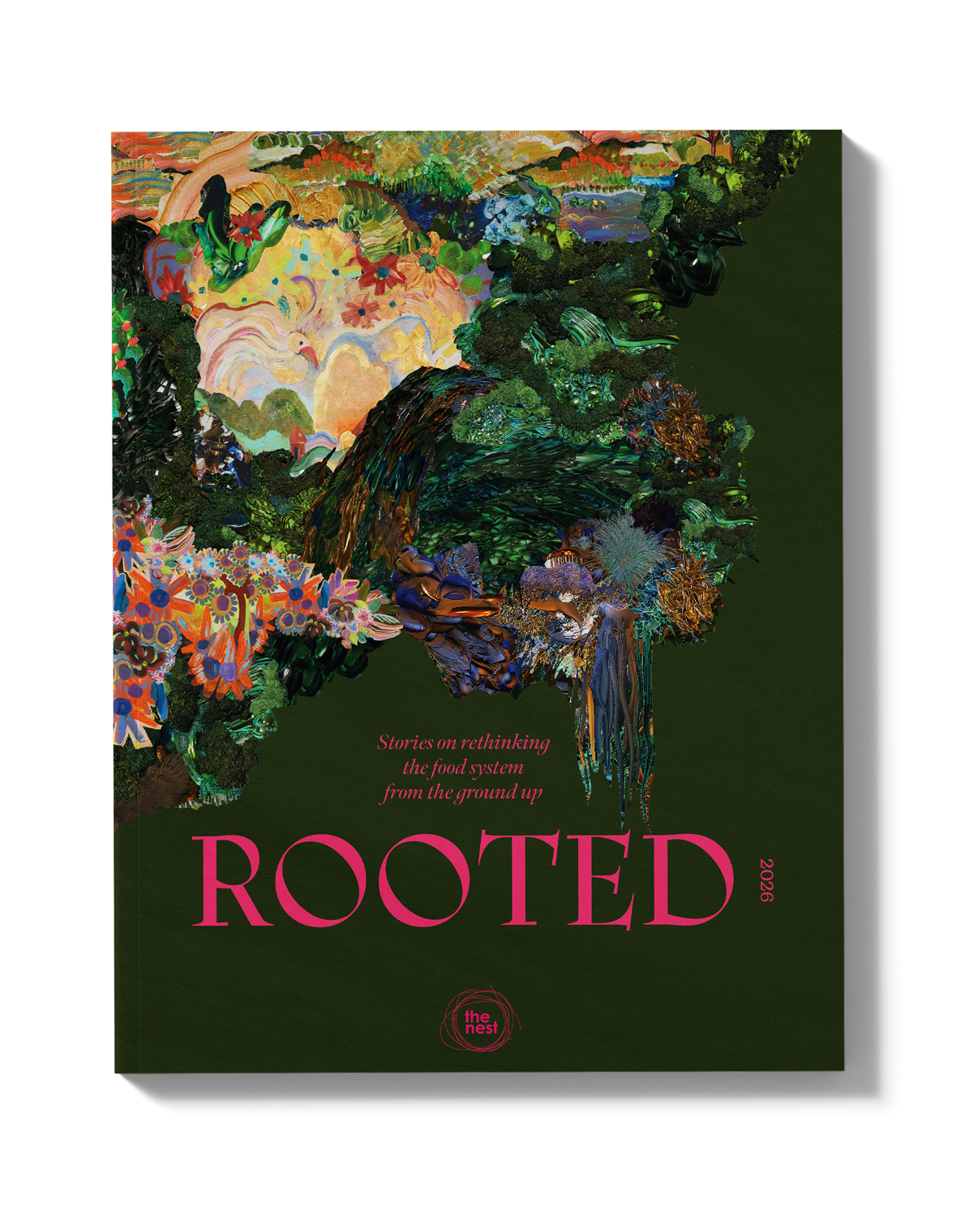
This opinion piece appears in the first issue of Rooted, a magazine about rethinking the food system from the ground up. Rooted is where data meets story, where numbers make way for the people, soil, and decisions behind them. You can read the full issue here