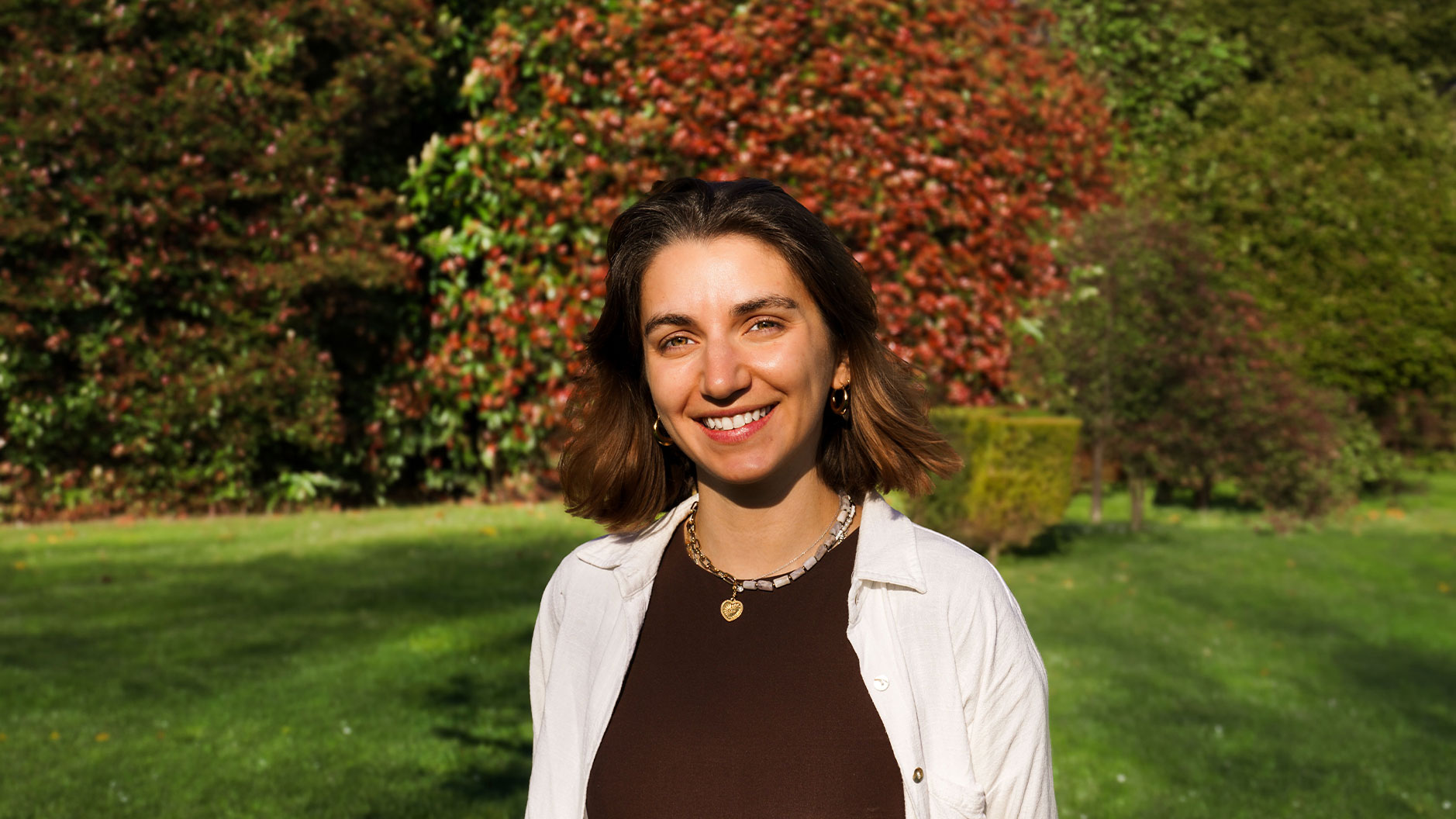
To mark five years of The Nest, we sat down with Johanna, our Impact Coordinator, and asked her five questions about how we measure, understand, and create impact. The conversation that followed is shaped by curiosity, bold questions, and a deliberate openness to change.
What does impact look like in systems?
Johanna: In systems thinking, rather than checking boxes or hitting metrics, real impact means nudging a system toward tipping points where new patterns emerge and positive change begins to sustain itself. In complex systems, real impact moves slowly and relies on collaboration. Take the food system: investing in regenerative agriculture doesn't instantly transform all farming practices or the quality of the food that ends up on our plates. But it sets the conditions for change: better soil management, collaboration and exchanges amongst farmers, markets that reward regenerative practices, and consumers empowered to choose food grown with care. Over time, these shifts in behavior, relationships, and power dynamics reinforce one another, creating ripple effects that no single investment or actor can take full credit for. While meaningful, these shifts can also take years to fully materialize and don't lend themselves easily to metrics. At the systems level, impact is therefore less about delivering immediate isolated outcomes, and more about building the conditions where lasting change can take root.
Why do we need an Impact Coordinator?
Johanna: Because impact doesn't happen by accident, it happens by design. My role is about measuring what truly matters to help ensure our decisions are grounded and our contribution to system change is tangible and intentional. For instance, this can mean tracking how our farming practices at Domaine de Graux enhance soil health and biodiversity over time, or assessing how our investments contribute to the different outcomes envisioned in our theory of change. In short, I'm here to help make sure our investments are aligned with the change we want to see and to provide the evidence to show it.
How do you even begin measuring impact?
Johanna: It starts with asking the right questions: "What should we measure? And why?" Over the past few months, we've begun developing our Impact Measurement and Management (IMM) approach. Concretely, we aim to evaluate our investments on two complementary levels. First, we will assess the effectiveness of each investment in achieving its intended outcomes. Here, we will align with established frameworks such as the SDGs or planetary boundaries, and report relevant metrics like avoided emissions, hectares transitioned to organic, or healthy meals served. Then, we will evaluate how each investment contributes to broader change in the food system. By mapping how interventions interact across our portfolio and the level of change they influence, we can identify ripple effects from projects that for instance enable synergies or help shift consumer behavior. In short, we want to look beyond project-level outcomes. We aim to understand both the depth of impact (how much a project achieves) and its systemic contribution (how it drives longer-term, structural change).
Over time, this approach will help us ensure our portfolio drives real, tangible change. But IMM isn't just a one-time exercise; it's a learning process that evolves as our understanding of the system deepens. It will require experimentation, iteration, and some trial and error. But ultimately, IMM will allow us to monitor and pursue impact with the same rigor and intentionality that we apply to financial returns.
How do we put this into practice?
Johanna: With humility and the courage to iterate. IMM is an evolving exercise, based on a framework that adapts as we learn. Standard KPIs (like avoided emissions for example) are useful for comparison, but systems transformation doesn't have a single metric to optimize for. Moreover, impact is deeply context-specific, even within the same sector. Hence, we can't simplify the whole impact question with just a handful of well-defined indicators.
There's also a real challenge with IMM. In the rush to quantify impact, we can unintentionally "shrink" the ambition required for true transformation. This means that the wrong metrics can create perverse incentives. When what you measure becomes the target, it stops being a good metric. For instance, measuring only by the number of acres transitioned to organic, the focus risks shifting to hitting the target of acres rather than supporting farmers with the training or market access they need to maintain practices in the long term. Then, you're just chasing "more" (more farms, more acres, more units, more customers) while losing sight of what you're actually trying to change.
In short, there are no shortcuts. What matters is ongoing reflection and curiosity, a willingness to sit with this complexity, and a commitment to continuously test and refine our measurement system. Done well, IMM is more than a reporting exercise, it becomes a learning practice. And continuous learning is exactly what systemic change requires.
How does The Nest shape meaningful change across the food system?
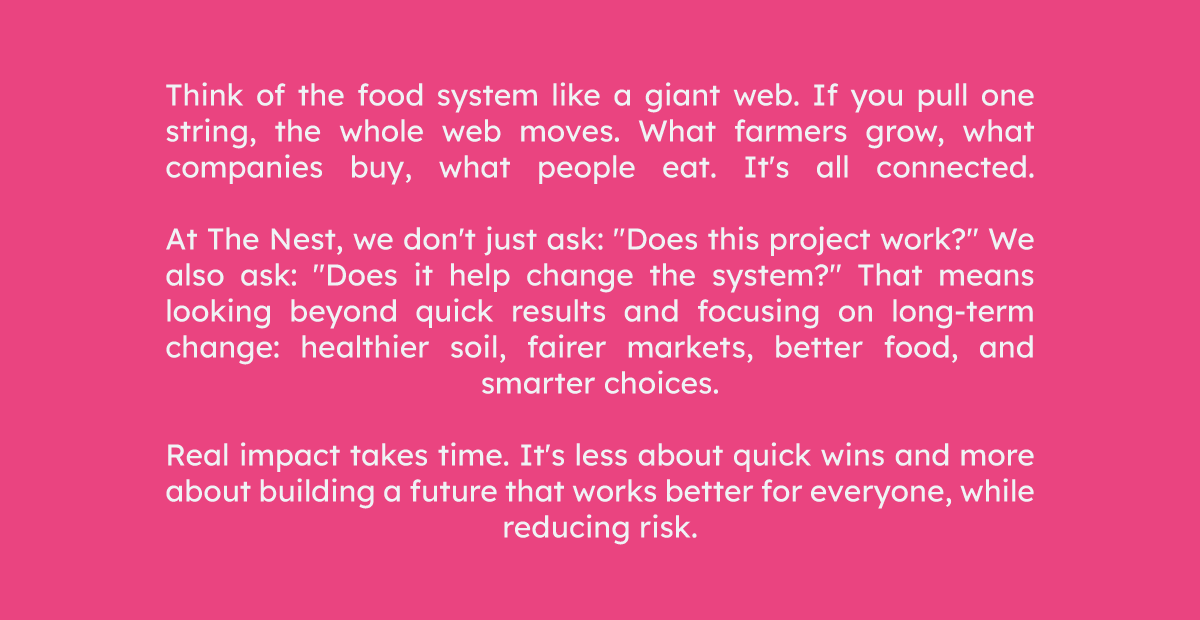
Johanna: We see our portfolio not as separate investments, but as a network of mutually reinforcing efforts. Our focus is on the dynamics we enable, not just the outputs we track. For example, our farms benefit from the network and expertise of Farm for Good, and Biotope Group aims at ensuring fair offtake for our organic production, while Edacious can provide us with insights into the nutritional quality of our vegetables, helping us demonstrate that healthier soils truly lead to healthier food.
Metrics are tools, not goals. They help us learn, compare, and hold ourselves accountable. But our ambition goes beyond any single metric: We aim to make investment decisions guided by system-level impact, not just single-deal optics. We are shaping a portfolio that doesn't just deliver outputs but catalyzes lasting, systemic change.
Of course, our impact journey is just starting: We're experimenting, measuring thoughtfully, and learning continuously. We don't have all the answers, but we dare to dive into these complex questions.
------
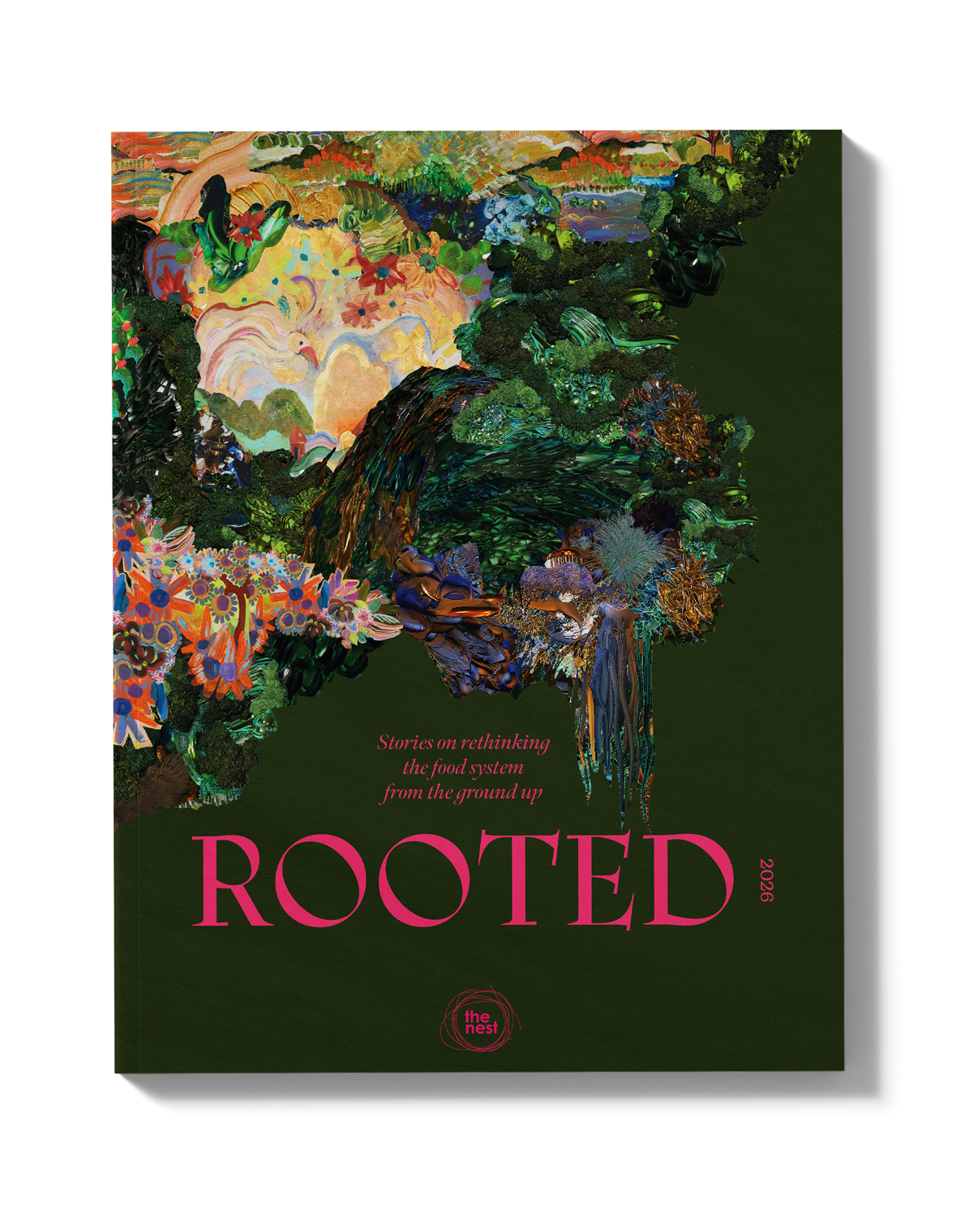
This article appears in the first issue of Rooted, a magazine about rethinking the food system from the ground up. Rooted is where data meets story, where numbers make way for the people, soil, and decisions behind them. You can read the full issue here