


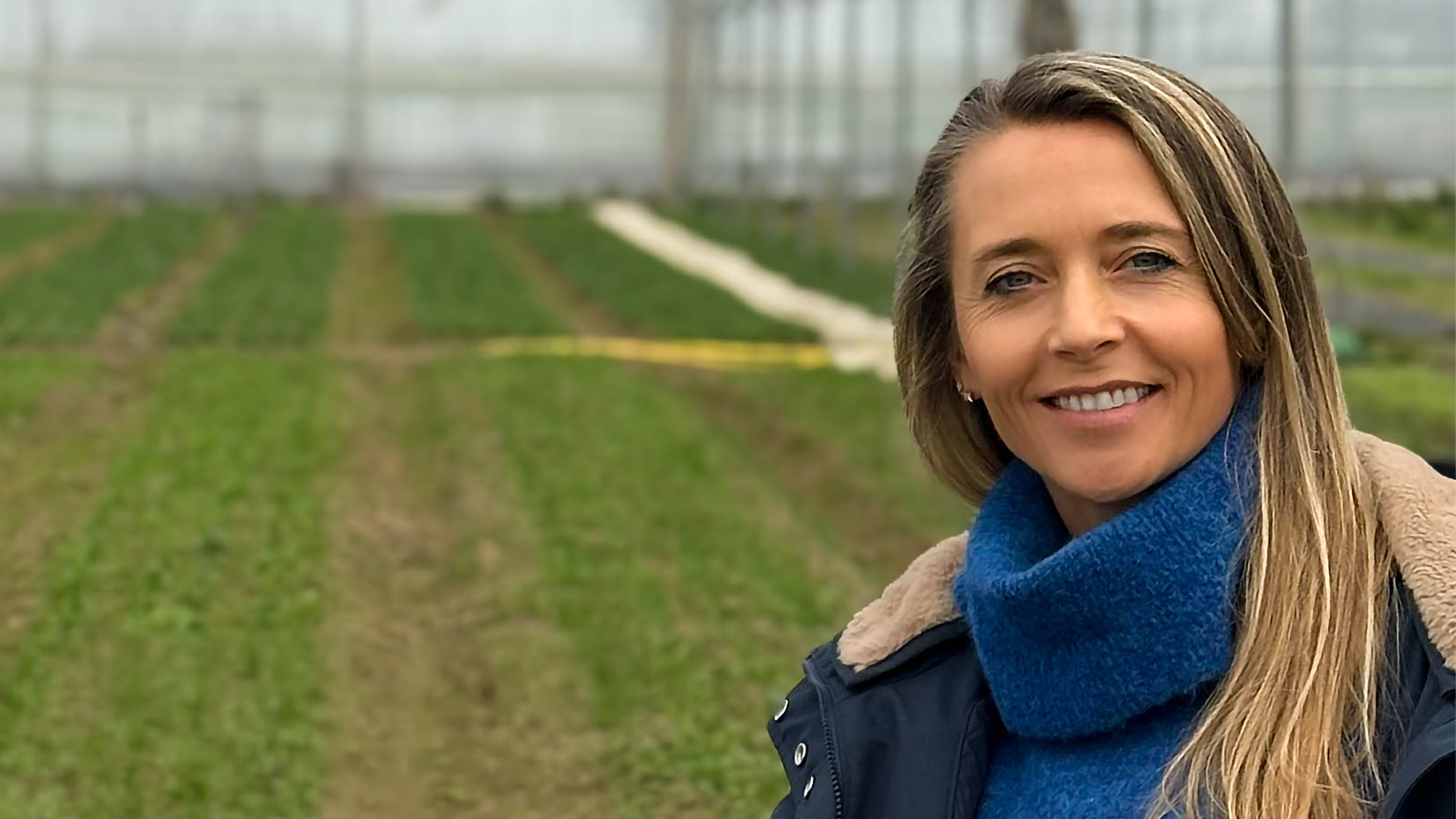
A little over five years ago, Els Thermote founded The Nest Family Office on a single conviction: that food is medicine, for both people and planet. In the years since, she has watched a growing community of companies move our food system towards something healthier, more resilient and more sustainable. Many of them capturing that progress in genuinely excellent impact reports.
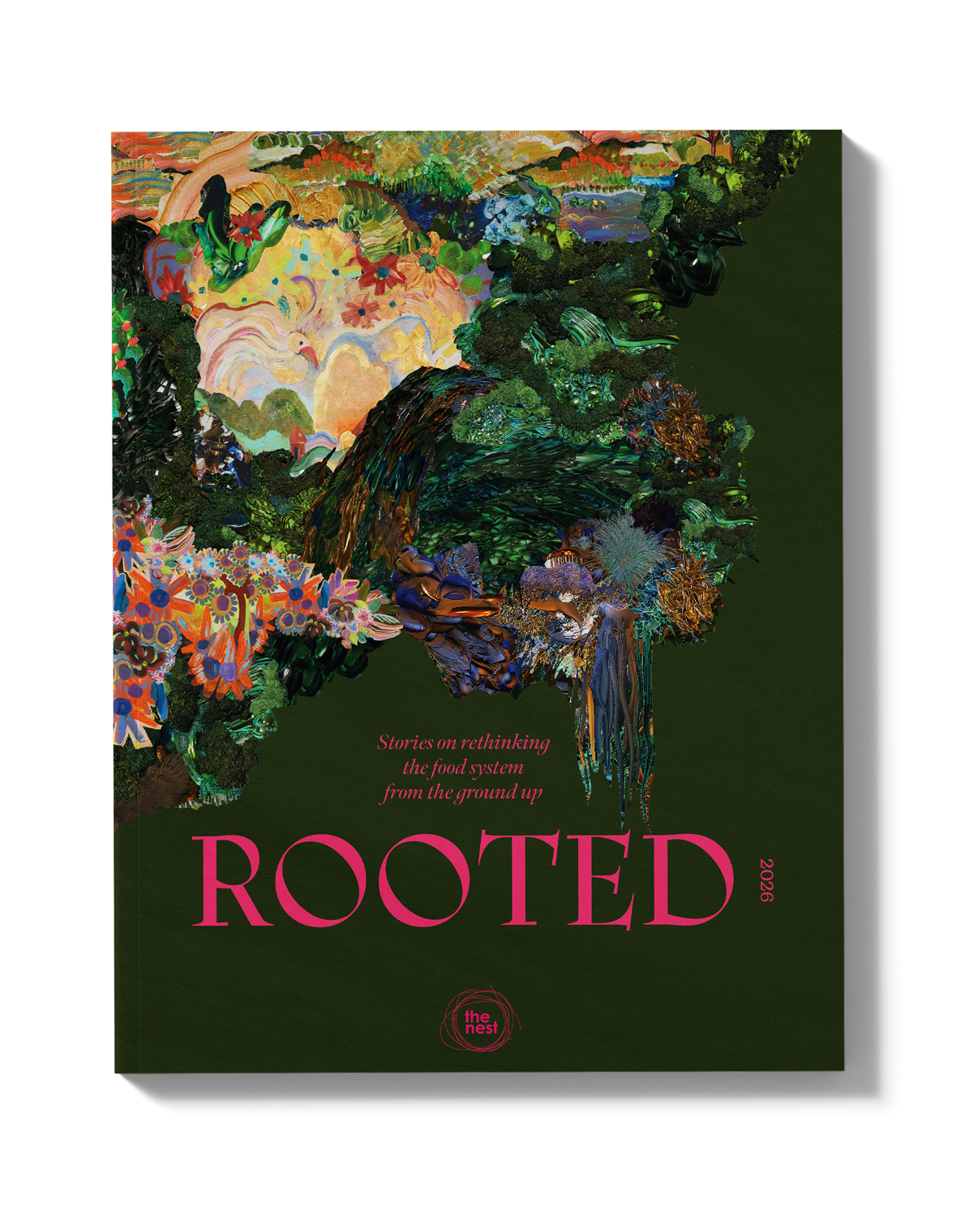
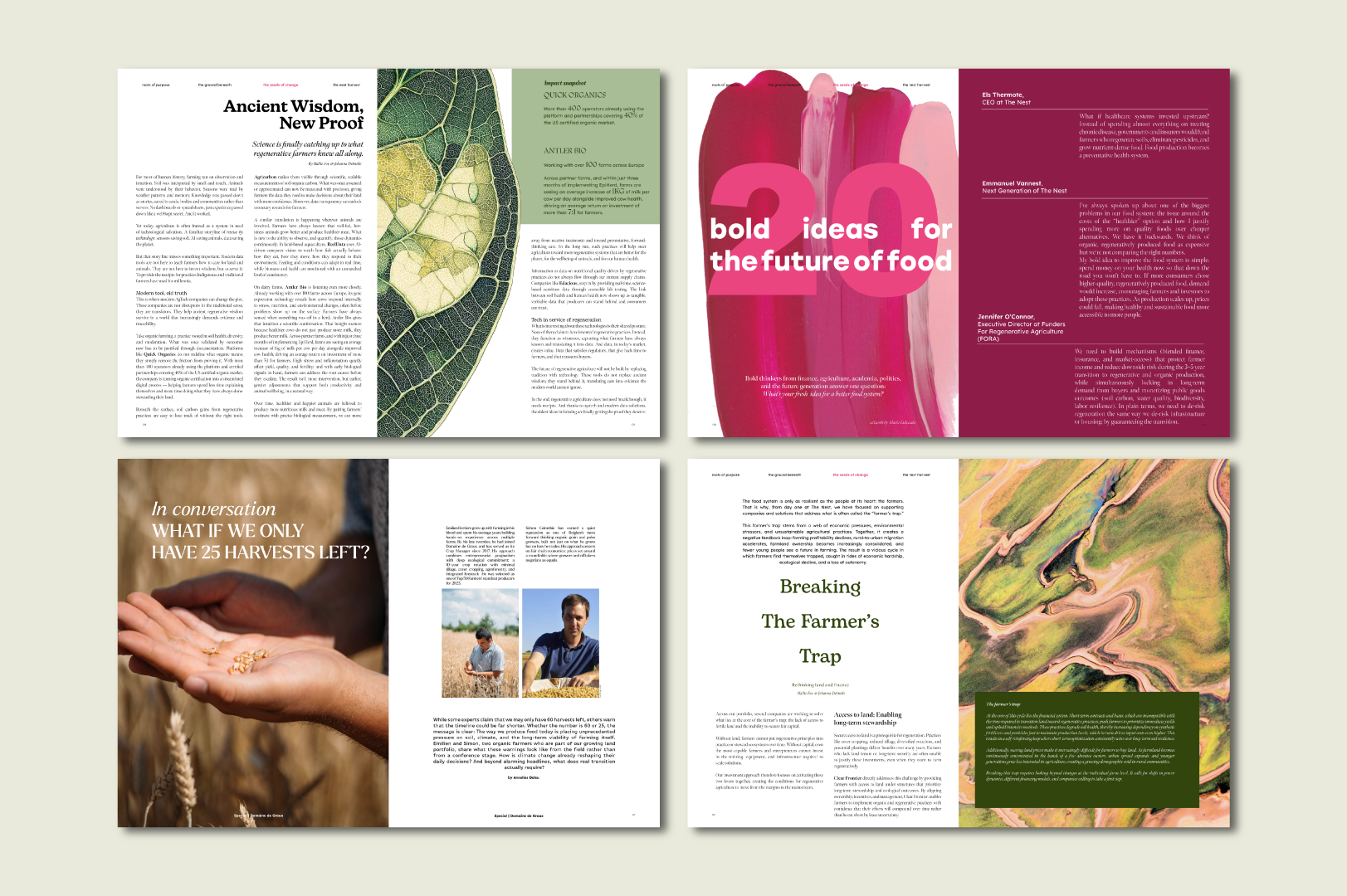
Yet those reports, she noticed, rarely travel far beyond the impact community itself. That felt like a missed opportunity. So rather than publish another impact report, The Nest created Rooted: a magazine about the future our food system could have, and a bridge between the many stakeholders who shape it.
“We’ve complemented data with stories. Numbers with people. And businesses with the trade-offs they sometimes face when putting soil first,” Els explains. Rooted begins with the kind of question a three-year-old asks: Where does our food come from? Who grew it? What does the soil need? “These are not naive questions,” she says. “They are foundational ones, and too often forgotten in the rooms where important decisions get made.”
WHY FOOD IS WHERE WE START
After your career as CEO of TVH Americas, you founded The Nest in 2021. Your work today is deeply rooted in food, health and sustainability. Where did the journey begin?
Els: The seed was planted back in 2007, when I was diagnosed with gestational diabetes during my second pregnancy. I still remember the moment very clearly. Diabetes wasn’t an abstract medical term for me, my mother had it, and I had seen up close what it can do over time: how it affects your energy, your body, your freedom. So it felt like a real wake-up call. I remember thinking, “I don’t want to take insulin. I don’t want to follow the same path. There has to be another way.” When the nurse told me I could manage it through what I eat, something clicked. I chose healthy food, and my body responded immediately. That was the moment food stopped being just food. It became medicine.
How did that personal experience translate into your professional life?
Els: What surprised me most was how little I actually knew about food before that moment. I started digging deeper: what to eat, what not to eat, how food is grown, and why so many people struggle with metabolic health. As I learned more, I began wondering how I could translate that into something broader, beyond my own family. And what better place to start than with the people you work closely with every day and care about? In 2008, we launched a comprehensive health and wellness program at TVH Americas, our family business. It went far beyond a typical corporate initiative: an on-site garden for employees, an on-site health clinic that was free of charge for employees and their dependents, and a strong focus on preventive care. We offered healthier meals and training around nutrition, exercise and overall wellbeing. It wasn’t about productivity; it was about genuinely caring for people. Over time, health and wellness became a big part of the company culture.
"The deeper I went, the more I understood: health doesn’t start in hospitals. It starts in how we grow food. And how we grow food starts in the soil."
Then came a major transition in 2019. What changed?
Els: 2019 was a pivotal year. Our family stepped away from the day-to-day operations of TVH, which also resulted in a first liquidity event. Until then, everything had always been reinvested into the business. At the same time, I was going through major personal changes: moving back from the US to Belgium with four children, stepping away from my role as CEO of the Americas operations, and asking myself a big question: “What’s next?” And then COVID happened. As strange as it sounds, that pause mattered. It created space to slow down, reflect, and think deeply about what I wanted the next chapter of my career to be about.
How did that reflection lead to The Nest?
Els: When the liquidity event happened, I initially felt uncomfortable. It felt disproportionate to suddenly have access to capital that isn’t operating a business, while so many people struggle to meet basic needs. That discomfort forced a harder question: “What is capital for?” I knew I didn’t want to invest in bank portfolios just to accumulate more. I wanted to use it responsibly. And every time I reflected on where I could contribute meaningfully, I came back to food. When you look closely, our current food system is incredibly efficient at producing calories. But it is also highly dependent on synthetic inputs, has fragile supply chains, and is causing soil health to decline. Farmers are squeezed between rising costs and global price pressure, while diet-related disease keeps rising. That’s not a moral failure. It’s a design failure. And systems can be redesigned. The deeper I went, the more I understood: health doesn’t start in hospitals. It starts in how we grow food. And how we grow food starts in the soil. Soil is alive! A teaspoon contains more microorganisms than there are people on Earth. That living system ultimately shapes the nutrient density of our food, the resilience of our ecosystems and our own health. If we want healthier people and resilient ecosystems, we have to start below our feet. That realisation became the core of The Nest: everything starts with our soil.
What does The Nest look like today?
Els: Five years on, The Nest has become a portfolio that reflects that vision. We invest from soil to stomach across different companies, asset classes and stages. Today we have around 35 investments, ranging from early-stage startups and VC funds to more established companies. What they all have in common is that they contribute to a healthier, more resilient food system, and demonstrate that food can be grown regeneratively and responsibly. For me, this is what systemic investing means. You don’t just ask, “Is this a good company?” You ask, “How can this company play a role in the future system we envision?” The system is under pressure: climate volatility, biodiversity loss, soil degradation. These are not opinions; they are constraints. If we want to keep feeding people in the future, we need to invest in regeneration rather than extraction. The Nest is about using capital intentionally, not only for financial return, but to support that transition.
If you had to summarize your mission, what would it be?
Els: To help build a food system that we can hand over to the next generation without apology. If we grow and buy food in a way that restores soil, farmers can build viable businesses. And if we invest with a long-term perspective, both human and ecological health improve. Because the health of people depends on the health of nature. That alignment, between health, agriculture and finance, is The Nest’s purpose.
Discover More
This conversation is part of ROOTED, our magazine about the future our food system could have. Read the full interview with Els and explore the rest of the issue here.