


Every system has a starting point. For agriculture, it’s the land. But not just any land; land that’s alive, resilient, and stewarded with care. In this first chapter, we dig into the foundation of a regenerative food system by exploring how land can be managed not only for productivity, but for long-term ecological and economic health.
Clear Frontier: Investing in nature, Rooted in partnership
Let’s begin our story on a farm in the US. It could be Nebraska. Or Oregon. Or rural Texas. The landscape changes, but the challenge is often the same: how do you keep the land productive, the farm profitable, and the soil alive - all at the same time?
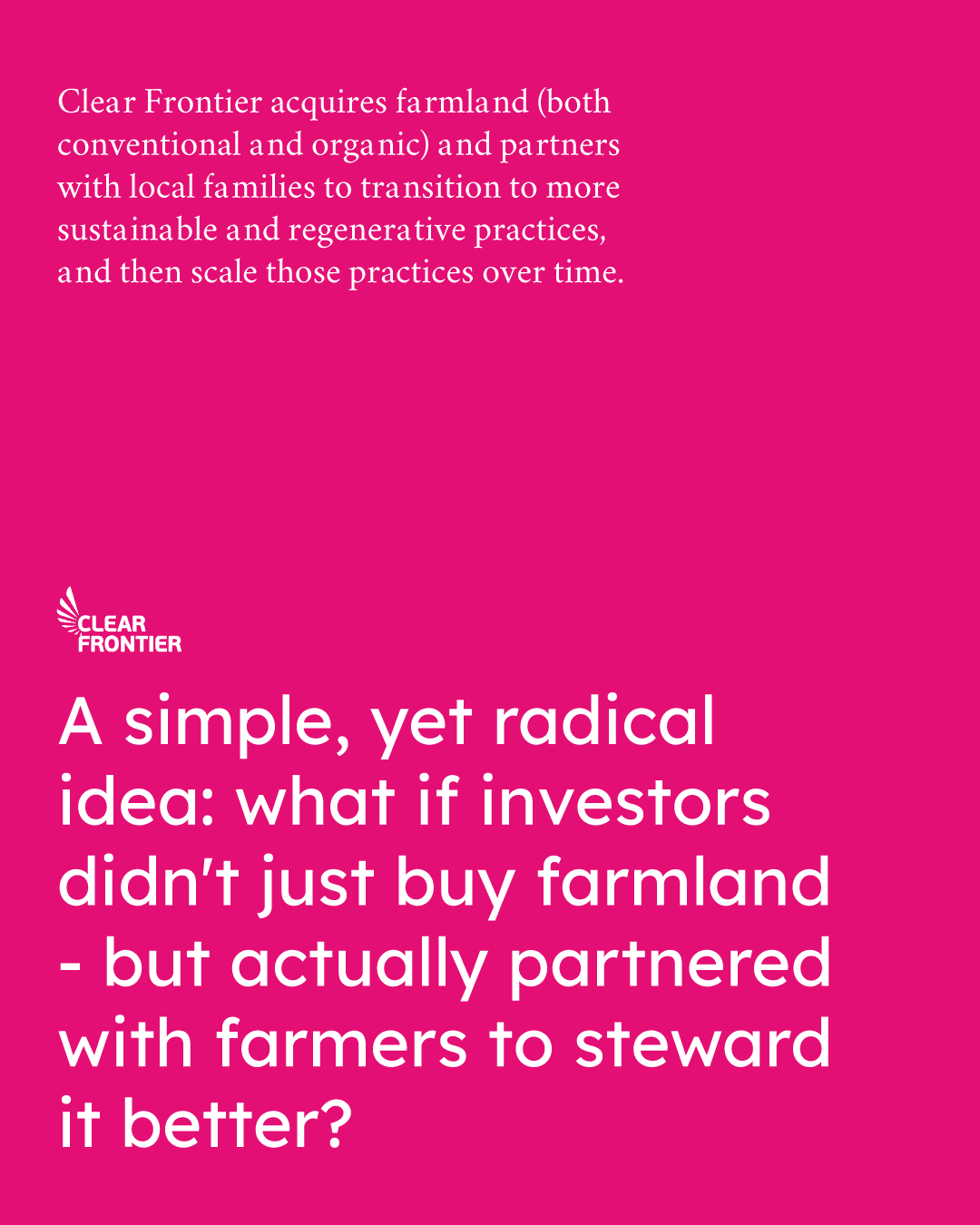
Clear Frontier is a natural assets fund with a simple, yet radical idea: what if investors didn't just buy farmland - but actually partnered with farmers to steward it better?
That’s exactly what they do. Clear Frontier acquires farmland (both conventional and organic) and partners with local families to transition to more sustainable, organic, and regenerative practices, and then scale those practices over time.
Today, Clear Frontier manages over 20,000 acres of farmland across North America. That’s:
- 7 family-owned farms
- 18 dedicated partner growers
- 12 different types of crops
But the true story lies beneath the surface: in the soil.
Investing in soil, Betting on resilience
In farming, soil is everything. It’s the base layer of every meal, every crop, every calorie. But decades of extractive practices have left much of America’s farmland depleted - not just of nutrients, but of resilience.
Clear Frontier helps reverse that trend. They focus on improving Soil Organic Matter (SOM) - a key indicator of soil health. As SOM increases, farms become more:
- Resilient to droughts and floods
- Productive over the long term
- Valuable, both ecologically and financially
In one farm alone, Clear Frontier helped improve SOM from 1.8% to 3.6% in just four years - doubling its carbon retention, water-holding capacity, and erosion resistance. And when healthy soil sticks around, so does the biodiversity!
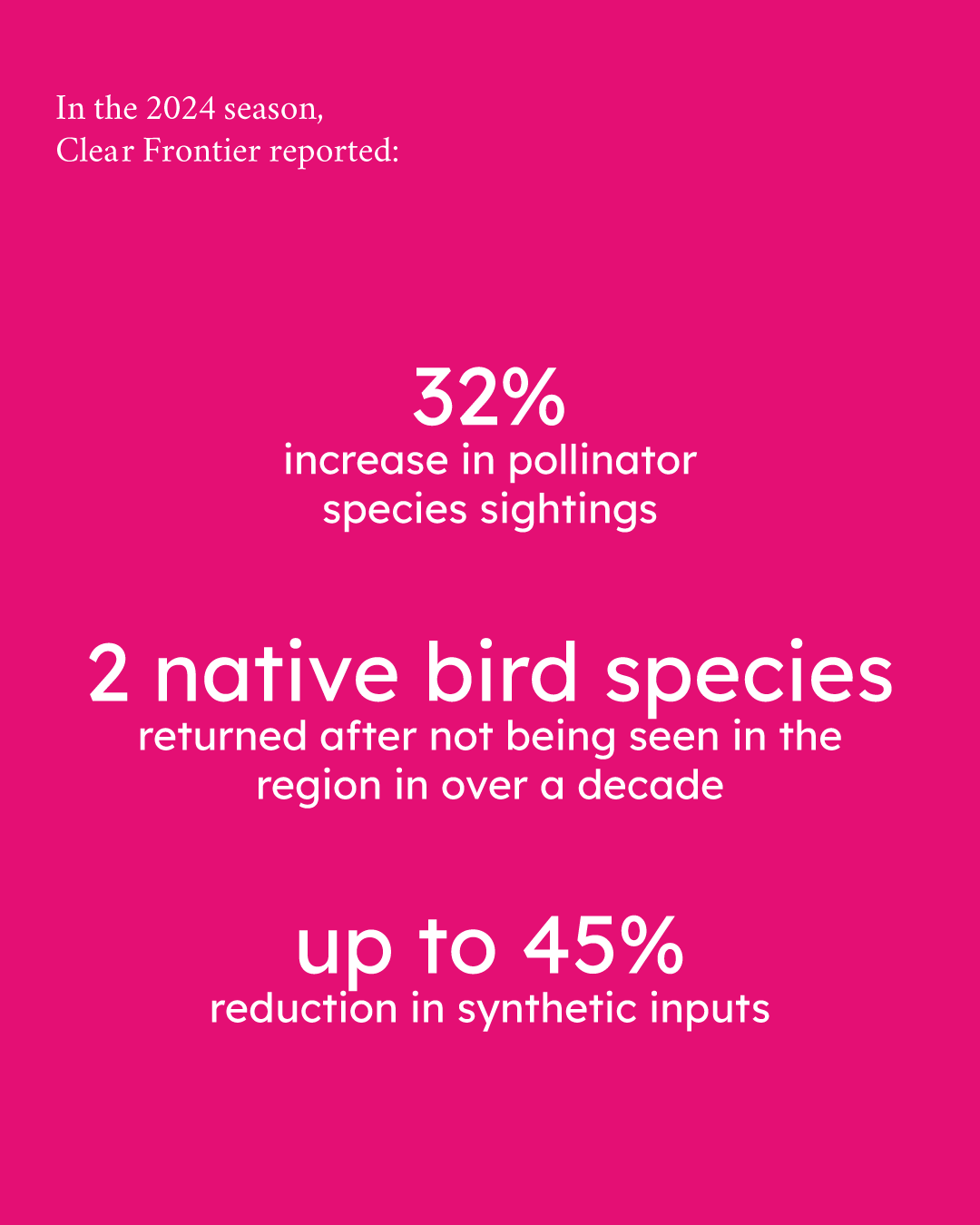
In the 2024 season, Clear Frontier reported:
- A 32% increase in pollinator species sightings
- The return of 2 native bird species not seen in the region in over a decade
- A reduction in synthetic inputs by up to 45%
These aren't just data points. They're signals that life is returning to the land.
The economics of transition
This isn't charity - it's smart, long-term investment. US demand for organic and regeneratively grown food has been rising for years. But the supply of domestic organic crops hasn’t kept up - leading to imports, inefficiencies, and missed opportunities for local growers.
By helping farmers convert their land and practices, Clear Frontier taps into this demand, closes the gap, and creates new jobs along the way.
They’re proving that it’s possible to do well by doing right - for farmers, for ecosystems, and for long-term investors.
Every system starts with a foundation, and for agriculture, that’s the land. But land without knowledge, support, access to markets, or connection to consumers, doesn’t build a system. It just sits there, full of potential.
In this series, we’ll explore the other building blocks of our future food system: two farms where history and experimentation come together to accelerate transformation; a bank financing the future of regenerative farming, a cooperative creating new markets for regenerative crops, and wholesale group making healthy food accessible and affordable to all.